Theo Chronis
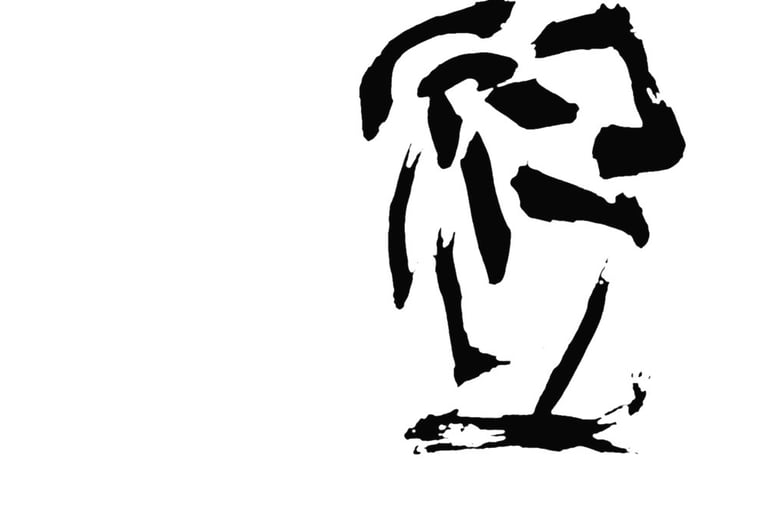
I make images that refuse to settle. My work lives on the threshold where a shape is about to become a thing and hasn't yet, where the eye recognises a body, a gesture, a face, and the mind, half a second later, has to concede it was looking at paint. That hesitation is the work. Everything else serves to hold it open.
I trained as a painter and have spent two decades treating that training as something to argue with. The questions underneath the practice are old ones: what an image is, how likeness works, why we trust a flat surface that promises a volume it can never deliver. On the central one I take Aristotle's side against Plato's. Mimesis is not the faithful copying of nature; it is a creative act that happens in the mind of whoever is looking, the recognition of a known form in an unexpected place. So I build pictures out of that recognition rather than hand it over finished.
My method is a negotiation between losing control and taking it back. A work usually begins with no image at all: chance, accident, marks I haven't decided on, sometimes laid down with the wrong hand or with my eyes shut. The next day I read that mess for what it is hiding and draw it forward, never all the way. I work in oils, pastel, ink and charcoal, often on one surface, and across physical and digital processes that feed each other. For a while that included AI; lately I have replaced it with fragments of real material, texture and the residue of physical making, which is closer to the kind of randomness I trust. What binds the chance to the figuration is composition, and that part I control completely.
The result is unfinished on purpose. I want the viewer to do the work I have refused to do for them: to complete the body that has no face, to supply the meaning the image withholds. We never look innocently. We bring our myths and our private wreckage to whatever is in front of us. I would rather make a surface that can hold all of that than one that dictates a single reading. The painting is finished only when someone else is standing in front of it.
I have never kept to a single style, and that is a position, not a failure of nerve. The contemporary image is built to be read at a glance, optimised for the scroll. I am interested in the opposite: in slowing the eye down, in the image that cannot be swallowed instantly and survives a second look. If the work has a politics, it is that.